
The Talon
Vol. 1 | Ed. 17
The Case That Found Its Voice Two Years Too Late
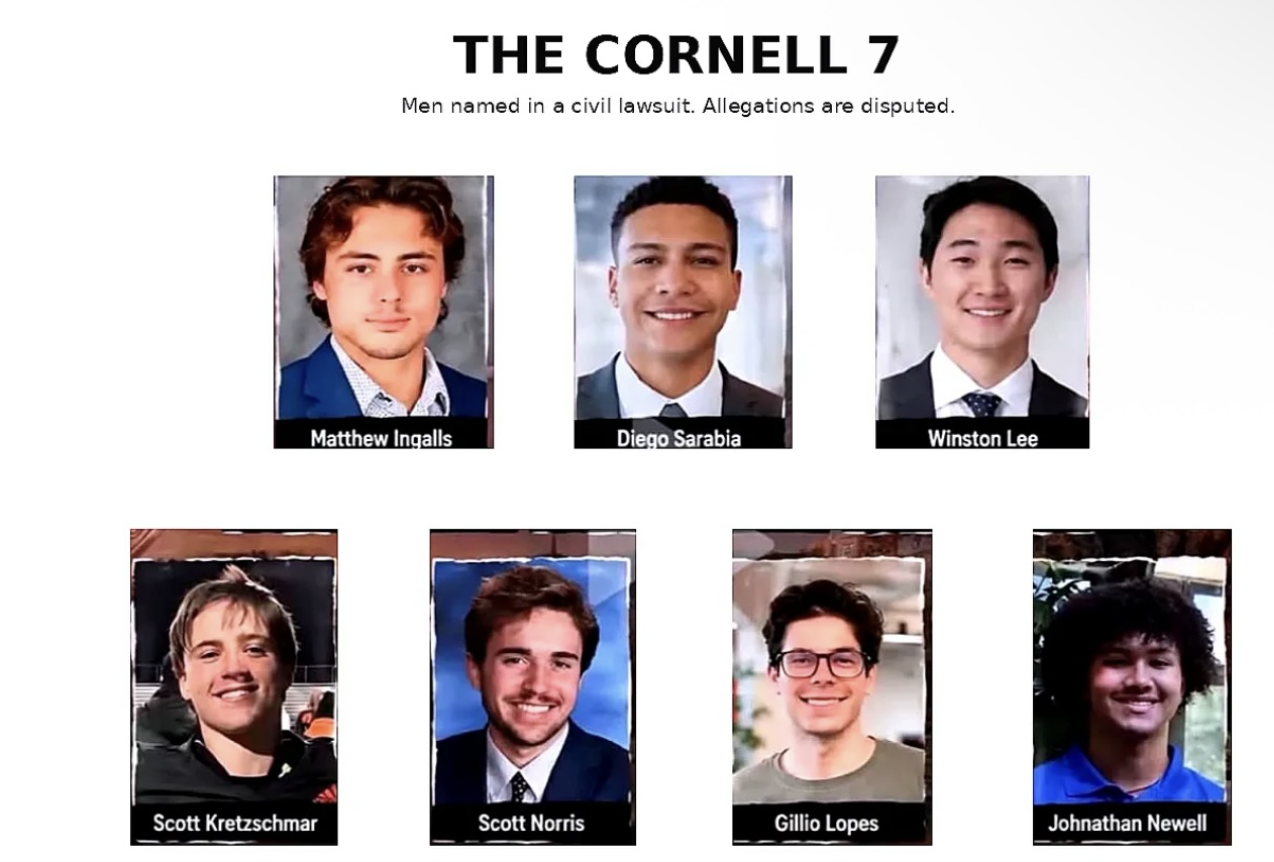
In October 2024, a 20-year-old Cornell University student was identified as Jane Doe (a woman who is a party to legal proceedings and whose true name is unknown or withheld). She reports that she had been sexually assaulted by multiple members of the Chi Phi fraternity after a night of drinking and drug use at the group’s campus house. Nearly 2 years later, her civil lawsuit names seven former students of the university. The university transformed a withheld case into a national controversy.
According to Jane Doe’s statement, the events unfolded on October 19 and 20, 2024. On the night of the 19th, she had been heavily drinking (10 drinks within three hours), and she went to the Chi Phi house to meet with a male friend. Reportedly, she was given more alcohol, smoked marijuana, and snorted ketamine. What she had agreed on—having sexual activities with two men—escalated to a group rape after a Snapchat message from a group chat of the fraternity members indicated that there was a girl upstairs, inviting other members of the frat to join. Jane Doe said that when these men would come into the room, she attempted to hide under the covers, expressed discomfort, and was drifting in and out of consciousness. She reported the incident to campus police on November 8, 2024, and said that she was 100% confident that she had been raped.
The men involved include: Matthew Ingalls, Jonathan Newell, Winston Lee, Gillis Lopes, Diego Sarabia, Scott Norris, and Scott Kretschmar. The seven men were suspended from the Chi Phi organization. The punishments of the seven men consisted of: expulsion of two students, while others received multi-semester suspensions, probation, and educational requirements. One graduate was barred from campus for three years and received no-contact orders and reflection assignments. Cornell has stated that federal privacy rules limited details and public disclosure of individual outcomes.
The county district attorney, Matthew Van Houten, reviewed a six-page summary of Jane Doe’s police interview and declined to pursue criminal charges in 2024, citing the account describing voluntary participation as well as the drug and alcohol use. After Jane filed her 101-page civil lawsuit (a non-emergency report) in mid-September 2026, Van Houten reopened the investigation on October 1st. New York Governor Kathy Hochul appointed Attorney General Letitia James as a special prosecutor to take over the criminal probe, citing concerns about the original handling.
All seven men have denied the rape allegations, with some acknowledging sexual contact they described as consensual while others denied participation. The case has prompted campus protests, an independent review of Cornell's response led by former Deputy U.S. Attorney General Sally Yates, and a temporary ban on fraternity social events for the remainder of the academic year.
As of mid-October 2026, no criminal charges have been filed. The civil lawsuit remains pending, and the special prosecutor's investigation continues. The Cornell Seven case highlights enduring questions about campus sexual assault investigations, the weight given to accounts of consent and intoxication, and the gap between the university disciplinary process and the criminal justice system.